
One day in Erciş: the lake, history and food
Do not try to fit every place into one day. Time beside the lake, one historic stop and an unhurried meal make a rewarding introduction to Erciş.
Discover Erciş and the Lake Van region through local food, wildlife, historic places and culture, from Balık Bendi and Ulupamir to Akdamar and Nemrut.
Do not try to fit every place into one day. Time beside the lake, one historic stop and an unhurried meal make a rewarding introduction to Erciş.
There is no single best season for Erciş. Watching fish migrate and discovering the grape harvest call for different plans.
To get to know Erciş, start with the lake. Its position on the northern side of Lake Van is part of the town’s story.
Fish travelling upstream in Deliçay are part of one of the most striking natural events associated with Erciş.
Pause beside the lake and the landscape begins to move: long legs crossing shallow water, necks bending to feed, small groups shifting along the shore.
The story of water at Erciş continues beyond the lake. Hot springs in the Ilıca–Zilan valley reveal another side of the landscape, connected to the ground beneath it.
The landscape of Erciş continues beyond the lakeshore. At Koçköprü Canyon, green summer slopes and long winter icicles give the same place two very different appearances.
Small dishes within reach, cheese beside the bread, a freshly poured glass of tea. Learning a few names is a good beginning to a Van breakfast.
Some dishes cannot be explained by one ingredient. Keledoş brings meat, grains, pulses and greens into the same spoonful.
The lake’s story continues in the kitchen. Preserved as tuzlu balık, pearl mullet brings another rhythm to the table, often with ayran aşı beside it.
The green flecks in the cheese are not decoration. A small piece of otlu peynir opens a conversation about local herbs, milk and the landscape beyond the breakfast table.
Think beyond a glass of ayran. In this bowl, the texture of wheat meets yoghurt and herbs: a small introduction to a much wider food tradition.
The table is a good place to begin getting to know Erciş. Its food connects the lake, the vineyards and a culinary tradition shared across the Van region.
Look closely at a bunch of Erciş grapes: purple-black fruit, thin skins and a tart edge alongside the sweetness. There is a landscape behind this local flavour.
Alongside grapes, another familiar name belongs to Erciş: kelem. The story of its cabbage begins in the fields and continues with leaves opened one by one in the kitchen.
Sometimes a bridge is understood through the traces beside the water rather than an arch that still carries people across.
The story of today’s town centre is closely connected to an older settlement beside the lake.
Sometimes the most interesting part of a building is a small detail carved into its stone.
A polygonal stone body and pointed roof distinguish Kadem Paşa Hatun Tomb in Erciş’s Vanyolu neighbourhood. The building carries a family’s memory across the centuries.
At Zernaki Tepe, also referred to as Zirnaki, the intriguing feature is the layout of a town: intersecting streets and repeated blocks rather than a single monumental building.
Lake Van on one side, stones carved with lettering and motifs on the other. Çelebibağı Seljuk Cemetery offers a way into the past of Erciş through the memory of its people as well as its monuments.
The past of Erciş survives beyond castles and monumental tombs. Small marks on a rock face can also tell a story about vineyards and water.
History does not always appear as a high wall. A channel bringing water to a field can be an equally meaningful trace of the past.
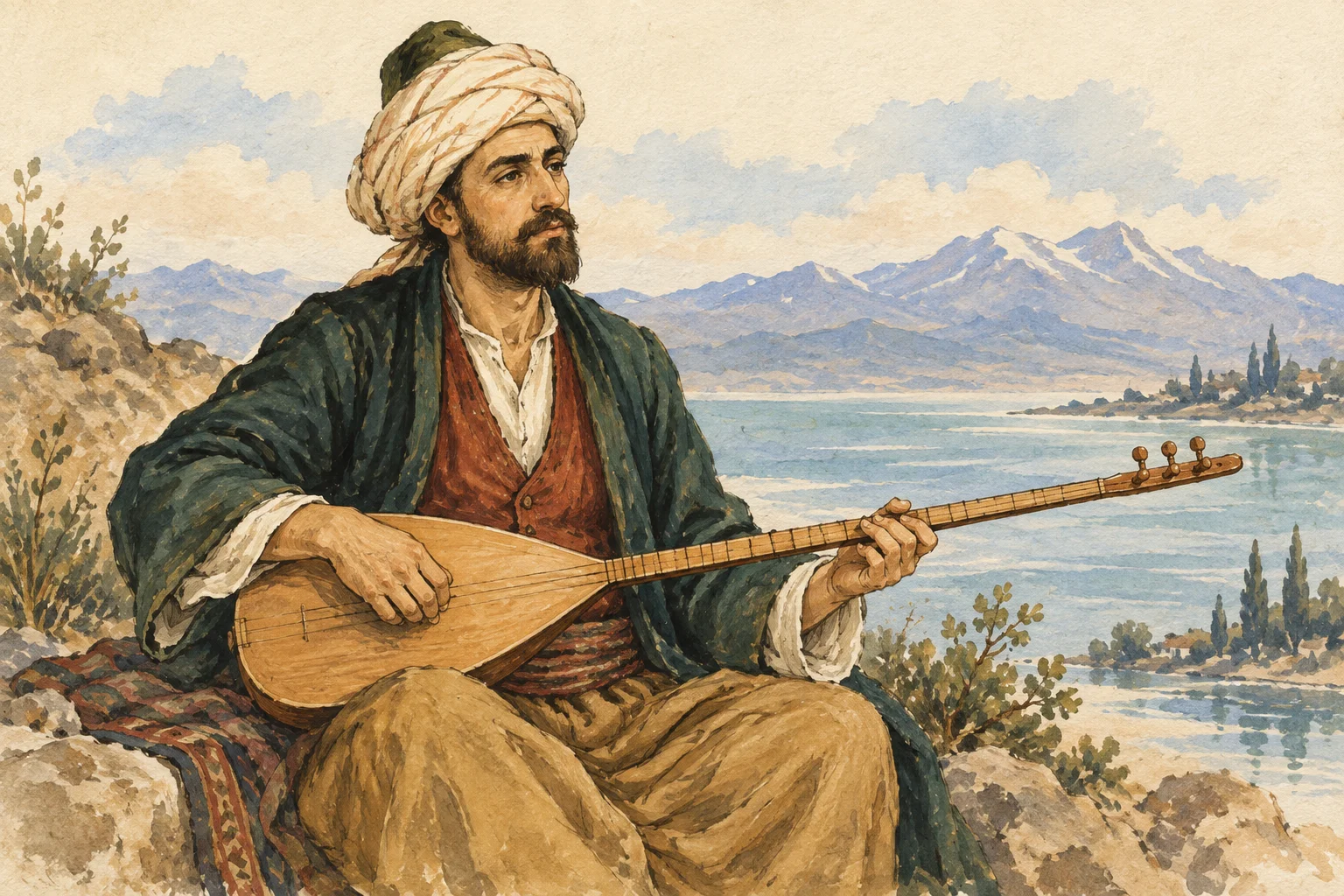
Erciş can be discovered through the stories people tell and sing, as well as the places on a map.
Ulupamir has a distinctive place on Erciş’s cultural map. Clothing, music, craft and equestrian traditions offer ways to get to know its Kyrgyz cultural life.
Separate outings beyond Erciş: mountains, lakes and historic places on the Van and Bitlis sides of the region.
A journey around the lake can reveal not only destinations but the old routes between them. Bendimahi Bridge in Muradiye is one surviving trace of those connections.
A white coat, a fluffy tail and a curious look. The Van cat is one of the familiar faces of the Lake Van basin, the wider region that Erciş calls home.
West of Erciş, towards Adilcevaz, the broad shape of Süphan accompanies the landscape. The smaller lakes around the mountain tell different stories about water.
Extend a journey east from Erciş and moving water brings a different atmosphere to the Lake Van landscape. Muradiye Waterfall is in Van’s Muradiye district.
Akdamar tells another story on the southern side of the lake shared with Erciş. Off the shore of Gevaş, a small church holds an extraordinary amount of detail on its walls.
West of Lake Van, the Nemrut caldera in Bitlis changes the perspective. Here, you look at water from inside an immense volcanic basin.


